


So, you’ve bought one of our gorgeous murals or already have one at home. You may have read up on how our wallpapers work and researched the current interior trends. It’s arrived. You love it. After all, our murals can make any home magazine-interview worthy. But, how do you keep it clean?
The thing is, our homes don’t solely exist in magazines. They aren’t always shiny and clean like the rooms on Pinterest and Instagram. They are real places where real people live. So, it isn’t a surprise when your sofa is stained by that sauce that once escaped your plate on takeaway night. That time when there was a horrendous red wine pool on your floor from that party you hosted. Oh, and don’t forget when your cute (yet incredibly tiring) toddler scribbled on the wall using all the colors of the rainbow.
We could be positive and say that these stains are “memories” that make a house a home. Or, we could stop procrastinating and get rid of those irritating stains, bits of dirt and mold.
Before you do anything: the 60-second safety check

The single most important principle in wallpaper cleaning is damp, not wet. Excess moisture seeps behind the paper, softens the paste, and weakens seams. Even fully washable wallpaper can be damaged by pooling water at joins. Run through this checklist before picking up a sponge:
- Dust the surface first. Use a soft cloth, feather duster, or a vacuum with a brush attachment, working top to bottom. Dust lifted by a wet cloth turns into a muddy smear.
- Patch test. Always test your chosen cleaning method on a hidden area: behind a door, inside a wardrobe recess, or near the skirting board. The same rule applies to any cleaning solution.
- Avoid: harsh scrubbing, bleach, solvent-based cleaners, and soaking. These will damage the surface layer or backing on virtually every wallpaper type.
Choose the right tools
Using the wrong tool is as harmful as using the wrong solution. Match your tool to the job:
- Soft microfibre or cellulose sponge: the default choice for damp cleaning on washable surfaces. Wring it out until it leaves no drip when squeezed.
- Dry cleaning sponge (soot sponge): excellent for dry, powdery soiling and for delicate or non-washable surfaces. No water involved.
- Art gum or rubber eraser: good for pencil and light scuff marks. Test first.
- Melamine foam (magic eraser): effective on tough marks but abrasive enough to remove the surface finish on textured or matte wallpapers. Only use on scrubbable-rated surfaces after a patch test. It's not magic eraser wallpaper safe on anything below a washable rating.
- Soft brush: for heavily textured surfaces where a cloth can't reach the grain; keep pressure minimal.
Never use wire wool, scouring pads, or paper towels with any surface texture, they scratch.
The basic method for cleaning wallpaper
This covers the majority of modern wallpapers, including most vinyl and non-woven types:
- Mix a few drops of mild, dye-free dish soap into a bucket of warm water. The water should feel slightly slick, not sudsy.
- Dip your sponge or cloth, then wring out thoroughly. It should feel barely damp against the back of your hand.
- Clean in light vertical strokes from top to bottom. Avoid circular motions, which can spread the stain and leave visible marks.
- If the surface allows, follow with a second pass using a clean cloth dampened with plain water to remove soap residue. Soap film left on the surface attracts dirt faster.
- Blot dry immediately with a clean, dry cloth. Don't leave moisture to evaporate on its own, this causes watermarks.
For stubborn marks, you can try a solution of one part baking soda to two parts warm water as a gentle escalation before reaching for anything stronger.
Stain-by-stain removal guide
Scuff marks and handprints
Start dry: a rubber eraser or dry microfibre cloth removes most light scuffs. If marks remain, a barely damp cloth with plain water is usually enough. Avoid soap unless the mark persists.
Grease and oily fingerprints
Never go straight to water on a grease mark, it spreads it. First, place a sheet of plain white kitchen paper over the mark and press gently to absorb the oil. Then use the mild soap solution with a barely-damp cloth, dabbing rather than wiping. Rinse the residue and blot dry. This is the safest approach for how to remove grease from wallpaper without enlarging the stain.
Ink, marker, and pen
Ink is high-risk. Rubbing spreads it fast. Dab (don't wipe) with a barely damp cloth. If that fails on a scrubbable surface, a tiny amount of rubbing alcohol on a cotton bud, applied only to the mark itself, can lift ballpoint ink. Patch test first, and accept that some permanent markers won't come fully clean without damaging the paper.
Crayon and color transfer
A rubber eraser or dry cleaning sponge tackles wax crayon surprisingly well. Lift with light strokes rather than pressing hard. On scrubbable wallpaper, a tiny amount of mild washing-up liquid on a damp cloth can dissolve the remaining wax residue. Rinse and dry promptly.
Food and drink marks
Act immediately. Blot liquid with a clean dry cloth, then apply the mild soap solution with a barely damp sponge. Rinse with clean water and blot dry. Dried food marks need a brief dwell time (one to two minutes) with the soap solution before wiping.
Mold and mildew
Mold on wallpaper is a warning sign, not just a cleaning problem. Address the source of moisture first, ventilation, condensation, or a damp wall. For surface mold on a washable surface, a dilute white vinegar solution (one part vinegar to two parts water) applied with a damp cloth can kill mold spores without harsh bleach. Rinse and dry the area thoroughly. If mold covers a large area or has penetrated the paper, professional assessment is the right call. You can find more guidance on bathroom wallpaper ventilation and care to prevent condensation damage in high-moisture rooms.
Nicotine and smoke yellowing
Nicotine stains are one of the toughest scenarios. The yellowing often isn't surface soiling, it's tobacco resin that has bonded with the paper. A mild sugar soap solution can reduce light yellowing on washable wallpaper, but heavily stained wallpaper is usually better replaced than cleaned. The odor binds to the backing material and won't shift with surface cleaning alone.
Watermarks
A watermark means moisture has already been in contact with the paper, so resist the urge to wet it again immediately. Allow the area to dry completely, then assess. If a ring remains, a barely damp cloth with plain water (no soap) worked from the outside of the ring inward can blend the edge. Thorough drying afterwards is non-negotiable.
Cleaning by wallpaper type
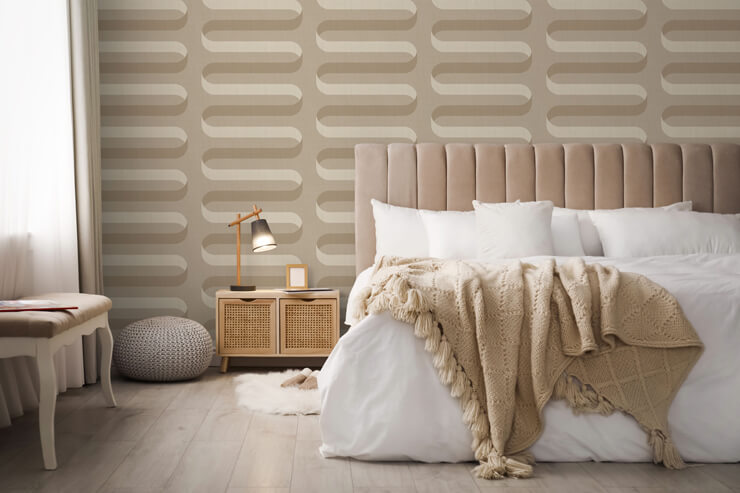
Folding Ribbon - Wheat Wallpaper
Washable and vinyl wallpaper
How to clean vinyl wallpaper follows the basic method above. Vinyl surfaces are the most resilient: mild soap solution, light strokes, rinse, blot dry. On scrubbable grades, a soft brush is acceptable for ground-in grime. This material suits kitchens and high-traffic areas well; see kitchen wallpaper ideas if you're choosing a surface for that environment.
Non-washable and natural texture wallpapers
Grasscloth, fabric-backed, bamboo, and cellulose wallpapers require dry methods only. A dry cleaning sponge or very lightly dampened cloth for isolated spots is the absolute limit. How to clean grasscloth wallpaper is essentially a dry process: vacuum with a brush attachment regularly, and treat individual spots with a dry sponge. Water causes permanent tide marks and can warp the natural fibres.
Peel-and-stick and removable wallpaper
Peel-and-stick surfaces tolerate a light damp wipe but react poorly to soaking or prolonged moisture, which can compromise the adhesive. Use a barely damp cloth with plain water for general cleaning, and blot dry immediately. Avoid any cleaning near the panel edges, where moisture is most likely to lift the material. For background on how this material is made and its properties, the guide to peel and stick wall mural benefits is useful reading.
Troubleshooting: when cleaning goes wrong

Color transfer or fading: stop immediately. The surface coating has been compromised. Rinse the area with a barely damp cloth, blot dry, and don't repeat that method. If fading is significant, the panel may need replacement.
Peeling or bubbling at seams: moisture has reached the adhesive layer. Blot the area dry and allow it to dry naturally with good ventilation. In many cases a small amount of seam repair adhesive applied with a fine brush will re-bond the edge. If the issue is widespread, reassess whether the wallpaper's rating was suitable for that location.
Residual soap film: if the surface looks dull or feels slightly sticky after drying, soap residue is attracting dust. Wipe with a cloth dampened in clean water only, then blot dry.
Spreading stain: stop, rinse the area with a clean damp cloth, and blot dry. Reassess the material rating, you may have exceeded what the surface can tolerate.
Prevention: keeping wallpaper clean between deep cleans
The best wallpaper cleaning method is one you rarely need. A consistent light maintenance routine reduces the frequency of intensive cleaning and extends the surface life significantly.
- Dust monthly. A feather duster or vacuum brush attachment on a top-to-bottom pass takes minutes and removes the particulate buildup that grinds into surfaces when touched.
- Spot clean immediately. A mark wiped away within minutes is almost always easier to remove than one that has dried and set into the surface layer.
- Control humidity in kitchens and bathrooms. These rooms see the most wallpaper damage from condensation and grease vapor. Good ventilation, an extractor fan running during and after cooking or bathing, is worth more than any cleaning product.
- Stay away from seams. When cleaning near panel edges, keep moisture away from joins. Clean parallel to the seam rather than across it, and use the minimum amount of moisture necessary.
Frequently asked questions

Distressed Bright Florals II mural
Can you clean non-washable wallpaper? Only with dry methods. A dry cleaning sponge or rubber eraser for marks, and a vacuum brush attachment for dust. Any moisture risks permanent damage to natural-fibre and delicate paper surfaces.
Can you use vinegar to clean wallpaper? Diluted white vinegar (one part vinegar to two parts water) is safe on washable surfaces and useful for mold, as it kills spores without the harshness of bleach. Don't use it undiluted, and always rinse with a damp cloth afterwards. Avoid it entirely on natural textures and non-washable papers.
Can you remove nicotine stains from wallpaper? Light yellowing on washable wallpaper can be reduced with a mild sugar soap solution, but deeply embedded nicotine resin and odour usually can't be fully cleaned. Replacement is often the more practical outcome.
How do you clean wallpaper without soaking it? Wring out your sponge or cloth until there's no drip when held over the sink. Clean in short, light strokes and blot dry immediately after each section rather than cleaning the whole wall before drying.
What's the safest cleaner to use? A few drops of mild, dye-free dish soap in warm water. Escalate to a 1:2 baking soda and warm water mix only if needed. On very delicate surfaces, plain water is the safest option.
How often should wallpaper be cleaned? A light dust once a month and spot cleaning as marks appear is sufficient for most rooms. A more thorough damp wipe on washable surfaces once or twice a year keeps the finish looking fresh without over-stressing the material.
And if a mural has genuinely reached the end of its life, the wallpaper removal guide walks you through taking it down cleanly so the wall is ready for whatever comes next.
![Grand Entrance Hall Ideas [Stylish & Affordable]](/images/blogs/Grand-Entrance-Hall-Ideas.jpg)
![Summer House Interior Ideas [Hot Tub Included!]](/images/blogs/Summer-house.jpg)

![How to Decorate with Orange [Expert Advice]](/images/blogs/decorate-with-orange.jpg)
Amy @ Wallsauce
17/04/2023Thanks, Steve! We agree, it's always best to consult the professionals :)
Steve Smith
13/07/2026I like how you mentioned that wall preparation would be needed for the appropriate process. My mother told me that their wallpaper was peeled because of old age, and she wanted to remove all of them. She asked if I had any idea what could be the best option to do. Thank you for the helpful article, and I'll be sure to consult a trusted wallpaper removal service as they can help with proper wallpaper removal and preventative measures.